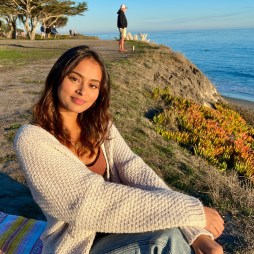
 Safiya Alavi
Undergraduate Researcher (2022-2023)
Project Website
Safiya is a Statistics & Data Science major at UCSB who is interested in applying the technical skills she’s gained through her major studies to ecological topics in order to gain a more broad understanding of the world. Currently, she is building on a project that looks at how the thermal sensitivity of plankton metabolism alters how many plankton there are, and how much photosynthesis and heterotrophy takes place in the sea. Now she will be conducting research on how marine plankton contributes to carbon and nutrient cycling in the world’s oceans by analyzing data that is produced from local-scale and global-scale models, specifically focusing on the effects of global warming in the ocean. Aside from an interest in data analytics, she enjoys traveling, reading and hiking. Check out Safiya’s website displaying her work here!
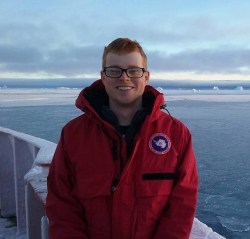 Dr. Kevin Archibald, Ph.D.
Simons Foundation Postdoctoral Fellow (2020-2024)
Google Scholar
Kevin is a biological oceanographer and ecosystem modeler interested in marine plankton and their impacts on global biogeochemistry and climate. He was a member of the Moeller Lab from December 2020 to August 2024, during which time he modeled evolutionary change in mixotroph physiology, biogeochemistry, and global distribution in response to climate change. Kevin did his PhD at Woods Hole Oceanographic Institution with Scott Doney, Michael Neubert, and Heidi Sosik. During that time, he conducted a variety of modeling and field studies including how zooplankton diel vertical migration contributes to carbon export and how grazer switching promotes diversity in phytoplankton communities. Kevin earned his undergraduate degree in Quantitative Biology at the University of Delaware, where he studied migratory bird ecology with Jeff Buler by tracking movements using National Weather Service radar data. Outside the lab, Kevin’s hobbies include reading, hiking, and learning to cook.
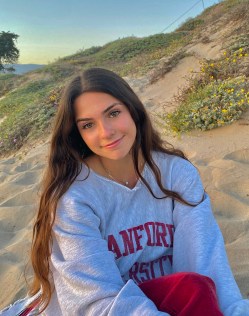 Gina Barbaglia
Undergraduate Researcher (2021-2023), Technician (2023)
Gina completed her Biology degree at UCSB in 2023. She studied the adaptive evolution of mixotrophic species in response to temperature changes. Her independent research quantified mixotroph phenotypic plasticity, and asked whether Ochromonas tolerance of high temperatures depends upon prey availability. Her work helped us to understand how mixotrophs vary their investments in photosynthesis and phagotrophy depending upon the resource landscape, and identified both synergies and tradeoffs in these metabolic investments. Aside from research, Gina enjoys surfing, yoga and eating sushi.
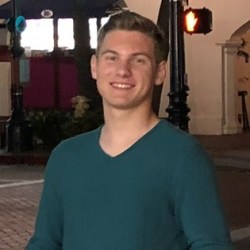 Ethan Baxter
Undergraduate Researcher (2020-2023)
Ethan is interested in mathematical models of all sorts, and wants to learn more about biological systems. He works on modeling and analyzing coral symbiosis. Further, Ethan’s current goal is to study what conditions and characteristics make a coral symbiont behave in specific ways. He is also interested in the applications of stochastic processes, game theory, and group theory to ecology and biology. In his personal life, Ethan enjoys playing the trumpet and sailing JV for the UCSB Sailing Team.
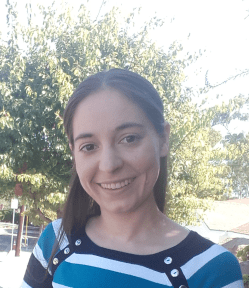 Dr. Alexandra Brown, Ph.D.
Postdoctoral Scholar (2020-2022)
Alexandra is interested in mathematical modeling and symbiosis. She works on models of coral symbiosis (with Drs. Holly Moeller, Roger Nisbet, and Ross Cunning) and on models of symbiosis in changing environments (with Drs. Moeller and Stephen Proulx). Alexandra did her PhD work at the University of Pennsylvania with Dr. Erol Akçay, building mathematical models of conditionally beneficial symbionts. She got her undergraduate degree from Brown University, where she worked in Dr. Dan Weinreich’s lab. Along with mathematical models and symbiosis, Alexandra loves all things Pokémon.
 Dr. Laura Bogar, Ph.D.
NSF Postdoctoral Fellow (2019-2022)
Google Scholar
Laura is interested in the ectomycorrhizal symbiosis between land plants and soil fungi. She likes to think about the community ecology of these symbiotic plants and fungi, the physiology that makes their cooperation possible, and how this mutualism has evolved. She joined the Moeller Lab in October of 2019 to start a project examining how ectomycorrhizal fungi contribute to tree seedling success, and looks forward to growing up many hundreds of small trees in the next couple of years. Her work on fungal portfolio effects was supported by an NSF Postdoctoral Research Fellowship in Biology. Laura did her PhD at Stanford with her mentor Kabir Peay. Her dissertation used stable isotope enrichment and RNA sequencing to understand resource exchange and host range in ectomycorrhizal symbiosis. She earned her undergraduate degree in 2012 at Lewis & Clark College, getting hooked on ectomycorrhizal symbiosis while doing research with Peter Kennedy. When she’s not doing science, Laura enjoys running, cooking, wondering what shorebird she might be looking at, and foraging for mushrooms.
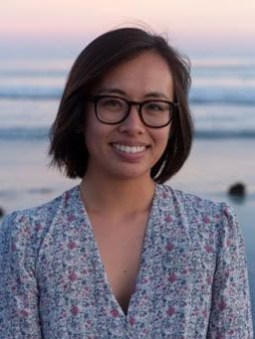 An Bui
Graduate Student (2018-2022)
An is a community ecologist driven to understand how interacting anthropogenic stressors alter competitive dynamics between functional groups of species. She uses empirical field methods to gather information on these species’ functions in their communities, and uses these data to parameterize models describing how species relationships will shift given future climate change. For her master’s project, she examined the relationship between climate and functional community composition of soil fungi in the Tehachapi mountains of California. An graduated from UC Santa Barbara in 2015 with dual degrees in Ecology and Evolution and English Literature, took time off doing as much field work as she could, and joined the lab in 2018. She relishes being asked for her help identifying birds, and in her spare time dives, knits, and kisses dogs on the forehead. She is a member of the Stier lab in EEMB.
 AG Camara
Technician (2024-2025)
acamara ‘at’ ucsb.edu
AG is a technician in the lab focusing on marine microbial systems and the evolution of mixotroph species in response to environmental change. She received a B.S. in Marine Biology from Western Washington University where she focused on bloom dynamics, life cycle, and community structure within snow algae populations. Beyond undergraduate research she’s worked on mitigation and monitoring of harmful algae blooms, as well as the analysis of algal microfossils to examine the history of algae blooms over geological time spans. Her current research interests include the effects of environmental stressors on coastal phytoplankton populations and the adaptive evolution of phytoplankton in response to changing conditions due to climate change. When not in the lab AG likes to spend time sailing and can be found reading a good book or chatting with the occasional seal.
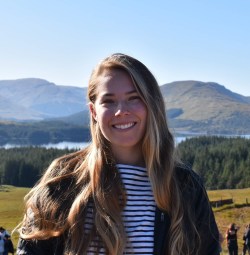 Grace Casarez
Undergraduate Researcher (2018-2021)
Grace is interested in the intersection between mathematical modeling and biological phenomena. More specifically, she works on modeling species interactions and acquired photosynthesis within plankton populations. Her objective is to better understand how these population dynamics change as a consequence of acquired photosynthesis and other factors, such as light availability. She has previously worked in the Ernst Lab at UCLA during the summer of 2019, developing machine learning approaches to comparative genomics. Outside of research, she enjoys kayaking, hiking, and doing pottery.
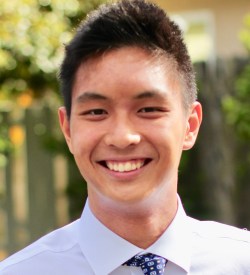 Ethan Chau
High School Intern (2017-2019)
Ethan has a passion for the life sciences and assisted with several laboratory techniques in the Moeller lab including data collection for photophysiology measurements and protist growth curves. He volunteered with the lab from 2017-2019. He assisted in an experiment investigating the effects of temperature on the mixotroph evolutionary response to climate change. Ethan also has experience as a summer intern working at the Laboratory of Integrated Neuroscience at the National Institutes of Health studying the impact of ketones on Parkinson’s Disease using a mouse model. He is looking forward to conducting research in college at UCLA!
 Dr. Raine Detmer, Ph.D.
NSF Graduate Research Fellow (2020-2025)
adetmer ‘at’ ucsb.edu
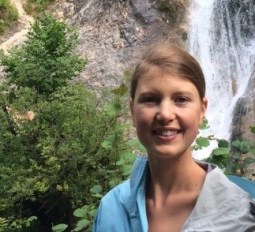
Raine is interested in both community ecology and mathematical modeling. She is particularly interested in using models to better understand species interactions in marine communities and how these interactions may be affected by environmental stressors. Her work in the Moeller Lab leverages the Santa Barbara Coastal and Moorea Coral Reef LTER datasets. Raine began her research career by modeling the interactions between Macrocystis pyrifera (giant kelp), benthic macroalgae, and sessile invertebrates and how this system is affected by disturbance from storms. More recently, she is exploring the incorporation of coral-associated animals into models of coral growth and bleaching.
 Ean Eberhard
Technician (2020-2021)
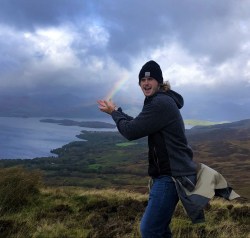
Ean is interested in the physiological and molecular responses of organisms to environmental stressors and how these stressors influence the structure and functioning of marine communities. His research in the group focused on our mixotrophic friends. Before moving to Santa Barbara, Ean worked as a research assistant and technician in multiple labs, studying a wide-range of interest. He received a REU to study the effects of global change stressors on diatoms with Dr. Uta Passow and Dr. Nigel D’souza at UCSB. After graduating from Oakland University with a B.S. in Biology, Ean decided to venture from the Great Lakes to the Pacific Ocean, returning to UCSB to dive deeper into his passion for marine ecology. In his spare time, he fancies diving, hiking, surfing (still working on it), and cooking.
 Maggie Doyle (she/her)
Undergraduate researcher (2021-2024)
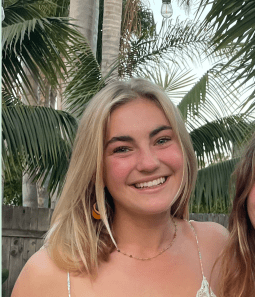
Maggie was an Environmental Studies major receiving her bachelor in science at UCSB. She is interested in a warming climate and its effects on the smaller organisms around us. She worked as an assistant on a project which explores the beneficial effects of mycorrhizal fungi on Valley Oak trees during a time of drought. She also studied the effects of warming ocean waters on a simple predator and prey relationship between the microbes Isochrysis galbana and Oxyrrhis marina. Outside of the lab, Maggie enjoys hiking, surfing, reading and cooking.
 Sevan Esaian
Graduate Student (2018-2021)
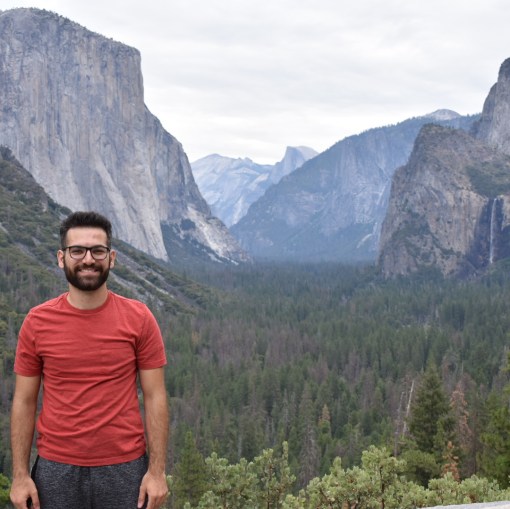
Sevan’s research is a part of the Santa Barbara Coastal Long Term Ecological Research Project (SBC LTER). He is using molecular biology, mathematical modeling, and geographic information science, to investigate epiphytic microbial population dynamics on Macrocystis pyrifera (giant kelp). His research focuses broadly on the synergistic effects of environmental factors driving giant kelp microbial abundance, diversity, and recovery throughout its life cycle (primarily senescence). During undergraduate studies at CSU – Los Angeles he studied the gene regulatory network of migratory neural crest cells in chicken embryos. He continued his education there as a MSc student by studying bird population dynamics and foraging preferences throughout the Los Angeles urban forest. Sevan joined the lab in Fall 2018.
 Logan Gonzalez
Undergraduate Researcher (2018-2020)
Logan is a biochemistry major with wide-ranging interests from prebiotic chemistry to global biogeochemical cycling. During his time in the Moeller lab, he assisted with various projects including ones aimed at understanding the responses of mixotrophic phytoplankton to environmental changes such as light and nutrient concentration. His independent research used mathematical modeling approaches to better understand the evolutionary dynamics of mixotrophs in response to environmental shifts. Logan also ran laboratory experiments using Paramecium bursaria as a model organism to study the competitive outcomes of acquired phototrophy.
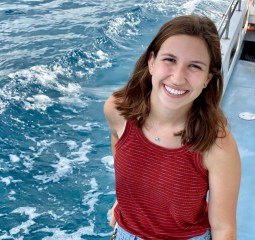 Meredith Honig
Technician (2022-2024); NSF Graduate Fellow (2024)
Meredith joined the lab as a technician to work on research focused on understanding the adaptive evolution of mixotrophic species in response to different environmental conditions. She earned her B.S. from UC Davis in Wildlife, Fish and Conservation Biology. Throughout her undergraduate career and beyond, Meredith has worked in various lab and field research settings, including social behavior in sharks, hummingbird disease ecology, wildlife genetics, and cheetah conservation and management. Meredith is interested in community ecology and how environmental stressors or anthropogenic disturbances influence the structure and functioning of ecological communities. Outside of the lab, Meredith enjoys reading, attempting to teach her cat how to walk on a leash, hiking, petting dogs, and birding.
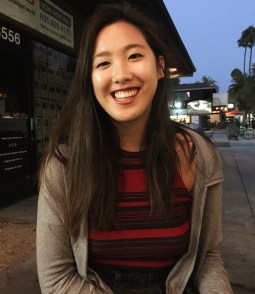 Veronica Hsu
Undergraduate Researcher (2017-2021); Goldwater Scholar (2020)
As the “lab’s first graduate student,” Veronica studied the effect of species arrival order on community composition, known as priority effects. Her work showed how mixotrophy (the ability of a single organism to utilize heterotrophy and photosynthesis) influences priority effects, using a model system of competition between Paramecium bursaria, a mixotroph, and Colpidium, a heterotroph. Her work on this system, and a later project studying management of agricultural pests, also involved ecological modeling. She worked with Dr. Tadashi Fukami at Stanford University for the summer of 2018, studying priority effects in a flower nectar biome system. Aside from research, Veronica played club water polo at UCSB and enjoyed the beach. After graduating from UCSB, Veronica began a technician position in immunology at MIT’s Koch Institute.
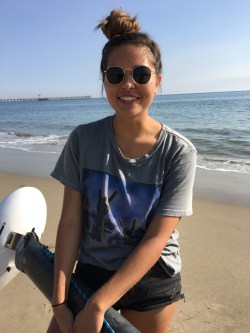 Kelsey Husted
Undergraduate Researcher (2018-2020)
Kelsey studied the microbiome of Macrocystic pyrifera (giant kelp). Mentored by graduate student Sevan Esaian, her main focus was on the abiotic factors that affect the microbial population of giant kelp. Her objective was to better understand the dynamics of giant kelp’s microbial community throughout its lifecycle. She previously worked within the Miller lab at UCSB as an intern from 2017-2018. Tasks revolved around assessing the biodiversity of sessile organisms in the Santa Barbara Channel and scientific diving. In Kelsey’s free time, she enjoyed surfing at Coal Oil Point, sailing, and playing with dogs.
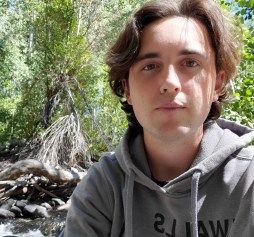 Jagger Joyner
Undergraduate Researcher (2020-2022)
Jagger worked on a model exploring plant-pollinator dynamics during a nonnative plant invasion. Specifically, this model is based on the invasion of Ice Plant (Carpobrotus edulis) at Campus Point. Jagger is also interested very generally in ecology and anything that has to do with plants; For example, they were also head of the UCSBlooms project at CCBER, which uses iNaturalist to map the phenology of plants on campus to get a better understanding of floral resources available to pollinators at different times of the year. Jagger also had a project studying nectar quality of plants at Campus Point. They could often be found around campus taking pictures of plants for iNaturalist or reading.
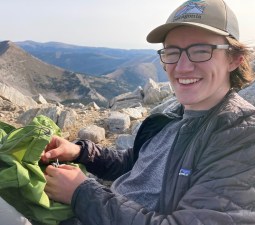 Jakob Kaare-Rasmussen
Undergraduate Researcher (2021-2023)
Jakob Kaare-Rasmussen was a Biology undergraduate in the College of Creative Studies at UCSB. Jakob is interested in all forms of mathematical models and how they can be used to describe ecological phenomena. Jakob developed and analyzed models that can help explain the complex relationship between coral and their symbionts. In particular, Jakob used mathematics to describe the mechanism that causes coral bleaching and the role the symbionts play in the process. He also developed new models for tree-fungal mutualism, understanding how metacommunity stability is impacted by disturbance. In the past Jakob has also worked with disease models, to better understand the role mutations can play in the spread of disease. He is also involved in developing the BIODISCOVER machine (BIOlogical specimens Described, Identified, Sorted, Counted, and Observed using Vision-Enabled Robotics) with Dr. Toke T. Høye at Aarhus University, Denmark. In his free time, Jakob can be found exploring the mountains.
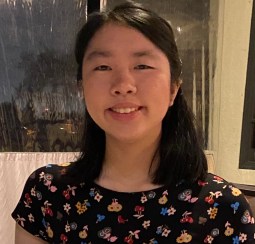 Josephine Kaminaga
Undergraduate Researcher (2022-2023)
Josephine is a Statistics & Data Science major at UCSB who is fascinated by the beauty and usefulness of mathematical modeling for ecology. Currently, they are synthesizing a corpus of data about marine ciliates in order to model the ciliates’ contributions to carbon cycling in coastal marine ecosystems. Josephine hopes to gain more experience with mathematical modeling, so that they can transform raw data into explanations for how all sorts of marine creatures affect their environments via the power of statistical analysis. Aside from all things data and science, Josephine enjoys fencing, writing poetry, trying new boba places, and playing open-world video games.
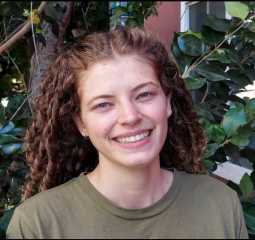 Ronja Keeley (she/her)
Undergraduate Researcher (2020-2024)
Ronja was an Environmental Studies major who is interested in ectomycorrhizal symbiosis and community ecology. She worked on a project exploring the relationship between Valley Oaks (Quercus lobata) and fungi. Specifically, her project examined whether microbial communities from arid sites are more helpful to oak seedlings than communities from mesic sites under drought conditions. Ronja’s other interests include Indigenous land management, restoration, and classical music. Outside of an academic setting Ronja enjoys hiking, mushroom hunting, birdwatching, reading, capoeira, and gardening.
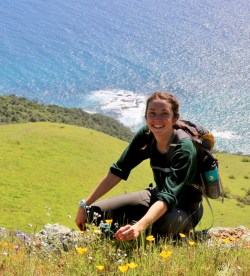 Kristen Klitgaard
Undergraduate Researcher (2019-2020)
Kristen is interested in plants, broadly. She worked with us to better understand the mutualistic relationship between trees and mycorrhizal fungi. Using mathematic modeling, she is studied the optimal investment strategy of a tree with fungal partners whose quality varies by season. She previously worked in Dr. Susan Mazer’s lab at UCSB under PhD candidate Kristen Peach to find how Clarkia unguiculata flowers’ pigment and pattern influenced pollinator visitation. Outside of the lab, Kristen spent her happiest time leading with Cru Santa Barbara, reading, and gazing lovingly at the ocean.
 Jessilin Lee
Undergraduate Researcher (2023-2024)
Jessilin is a Cell and Developmental Biology major at UCSB and is fascinated by the intersection between evolutionary ecology and climate change and how discoveries made with microscopic organisms could be applied on the global scale. They are assisting in projects studying the adaptive evolution of mixotrophic strains in response to warming ocean temperatures. Jessilin is interested in how mixotrophs could be harnessed as a carbon sink to prevent warming oceans from further impacting climate change. Besides research, Jessilin also has a passion for graphic design and in their free time can be found frolicking on trails or tide pooling along the beach.
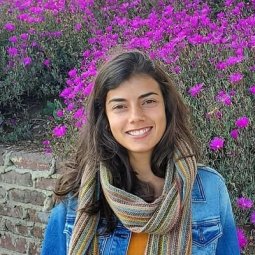 Dr. Suzana Leles, Ph.D.
Simons Foundation Postdoctoral Fellow (2022-2025)
leles ‘at’ usc.edu
Google Scholar
Suzana is a biological oceanographer. She studied Oceanography at the State University of Rio de Janeiro (UERJ) in Brazil. Suzana found herself most curious about what she couldn’t see – the ecological interactions within the microbial world. And she wanted to turn these into mathematical equations. During her Master’s in Ecology at the Federal University of Rio de Janeiro (UFRJ), she worked with Dr Gisela Figueiredo and started applying mathematical models to study plankton trophodynamics. Through the Brazilian program Science Without Borders, she was able to cross the Atlantic to pursue a PhD at Swansea University and the Plymouth Marine laboratory, in the UK, working with Prof Kevin Flynn and Dr Aditee Mitra on models of mixotrophic plankton. After that it was time for the Pacific – Suzana moved to USC to work with Dr Naomi Levine developing proteome allocation models for phytoplankton. Now, also working in the Moeller Lab, Suzana will combine models and experimental evolution to investigate the relationships between mixotrophy, cell size, and warming. Besides science, Suzana likes dogs (hikers or couch potatoes) and enjoys campervan life on the weekends.
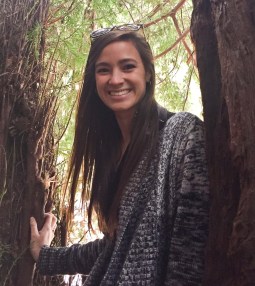 Michelle Lepori-Bui
NSF Graduate Research Fellow (2019-2022)
Michelle’s research investigated the evolutionary response of mixotrophic nanoflagellates to altered temperatures. Her work tested the hypothesis that mixotrophs become more heterotrophic under warmer temperatures, leading to a possible positive climate feedback loop. Before moving to Santa Barbara, Michelle worked as a research assistant with Dr. Tom Fisher at the University of Maryland Center for Environmental Science studying agricultural nutrient management strategies and water quality in the Chesapeake Bay watershed. She also has experience studying wetlands in Delaware and was an environmental educator in Marin County, CA. She graduated from the University of Delaware with a B.S. in Environmental Science concentrating in Hydrology, and minors in Geography and Wildlife Conservation. Her undergraduate research with Dr. Delphis Levia focused on forest biogeochemistry.
 Ryan Marczak
Technician (2021)
Ryan is interested in the biochemical and molecular biology of organisms and how they respond to a changing environment. He is currently conducting research involving mixotrophs. Ryan graduated from UCSB with a B.S. in Biochemistry-Molecular Biology. Throughout his undergraduate career, he had a variety of laboratory experiences ranging from research on the structure and dynamics of food webs to assisting with assay development for SARS-CoV-2 at UCSF. Aside from biology, he enjoys cooking, playing music, surfing, skiing, and hiking.
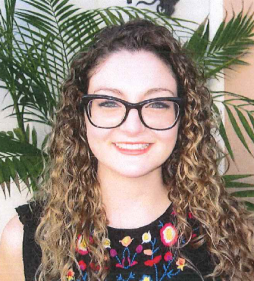 Conner Mertz
Undergraduate Researcher (2018-2019); NSF Graduate Fellow (2020)
Presently: Ph.D. Student, Univ. of New Mexico
Conner Mae Mertz worked in the Moeller Lab assisting in our mixotroph evolution experiment from 2018-2019. Conner met Dr. Moeller during an ecology course Dr. Holly Moeller taught the previous academic year and subsequently joined the Moeller laboratory. Conner played an important role in the monitoring the predator-prey interactions in the evolution experiments. Following graduation from UCSB, she worked for a year at Casa de Salud, before joining the UNM Ph.D. program in Biology to work with Dr. Vesbach and Dr. Newsome. For any inquiries please contact cmmertz@ucsb.edu.
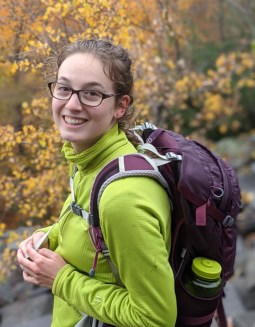 Isobel Mifsud
Technician (2021-2022)
Isobel joined the Moeller lab in August 2021 as a lab technician, assisting Team Fungus with any and all aspects of research. Isobel completed her Master’s thesis at Columbia University working with Dr. Duncan Menge, investigating nitrogen fixation in beetle larvae, and working to fix some of the methodological flaws associated with studies of N fixation in insects. Isobel is particularly fascinated by invertebrates and all their strange ways, but thinks all different scientific fields are interesting in their own way! She’s excited to learn and be part of the life sciences community at UCSB.
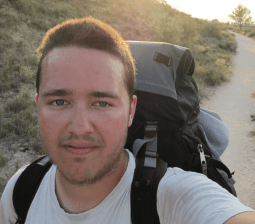 Andreas Norlin
Technician (2021-2023)
Andreas joined the lab in October 2021 as a Lab Technician to work on the cryptophyte, Mesodinium, Dinophysis project, assisting both in the modeling aspects and the laboratory aspects. Previously he worked with cryptophyte physiology for his master’s thesis and later worked on modeling other mixotrophic organisms such as Noctiluca and Radiolaria. Andreas has a passion for learning about and researching the natural world, with a special fascination for anything microscopic. In his spare time, he likes experiencing storytelling in all its forms from books, to films, to other electronic media. Lately he has been really engaged in ‘sim-racing’ where he races other people in virtual races online.
 Dr. Christopher Paight, Ph.D.
Postdoctoral Scholar (2020-2023)
Chris is an evolutionary biologist interested in the genetics of adaptation. He started his scientific career working with Dr. Teri Markow at the University of California San Diego, experimenting with Drosophila raised on diets with different carbohydrate ratios. This research explored differences between generalists and specialist species as well as the effect maternal diet has on progeny. He studied biology at the University of Louisiana at Monroe (advised by Dr. Russ Minton) to determine if shell shape in a freshwater snail Elimia potosiensis was phenotypically plastic. His PhD studies at University of Rhode Island (advised by Dr. Christopher Lane) examined the metabolic capabilities of a tripartite symbiosis involving tunicates, apicomplexans, and bacterial endosymbionts using a genomic/transcriptomic approach. As a NRC postdoctoral researcher at NOAA Pacific Marine Environmental Lab, he worked on designing long term monitoring projects using eDNA in Olympic Coast National Marine Sanctuary. As a member of the Moeller lab at UCSB, he worked on the evolution of kleptoplasty in the ciliate genus Mesodinium to determine the genetic entanglements of host and prey.
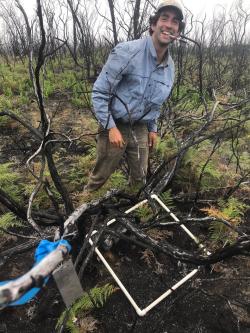 Dr. Gabe Runte, Ph.D.
Ph.D. Student (2020-2024)
Gabe is interested in plant-fungal symbioses and their role in creating the plant communities that dominate landscapes. He utilizes greenhouse and landscape studies to investigate mycorrhizal benefit in varying environmental contexts. Gabe’s current work focuses on the Southern California endemic Big Cone Douglas Fir (Pseudotsuga macrocarpa), in a collaborative project with the US Forest Service, aiming to understand fungal effects on reforestation success. Prior to joining the lab, Gabe worked under Dr. Carla D’Antonio, also at UCSB, as an undergraduate researcher and as a technician. He received a REU to study mycorrhizas in the wet forests of Hawaii and returned to work with US Geological Survey collaborators the following summer. Gabe was co-advised by Ryoko Oono during his Masters degree.
Gone But Not Forgotten
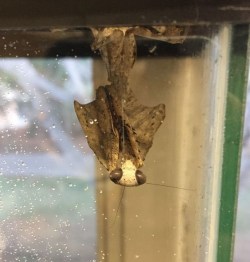 Morticia (f.k.a. Morty)
Lab Pet (2018-2019)
Now a specimen at the Cheadle Center
Morticia, a dead-leaf mantis, joined the Moeller lab in the summer of 2018. Before that, she had experience in behavioral ecology as part of the Pruitt Lab, where she assisted in teaching undergraduates experimental research techniques. In a study of whether behavior predicted attack rates, her species was the only one whose behavior patterns were significant. Her other interests included hunting and eating crickets, slurping up water droplets, and hanging upside down staring out the window. She went on to be the longest lived of all the mantids in her cohort, passing away surrounded by her friends on March 15, 2019.
 The Moeller Lab